Real vs Fake YouTube Views: How to Identify Genuine Video Promotion


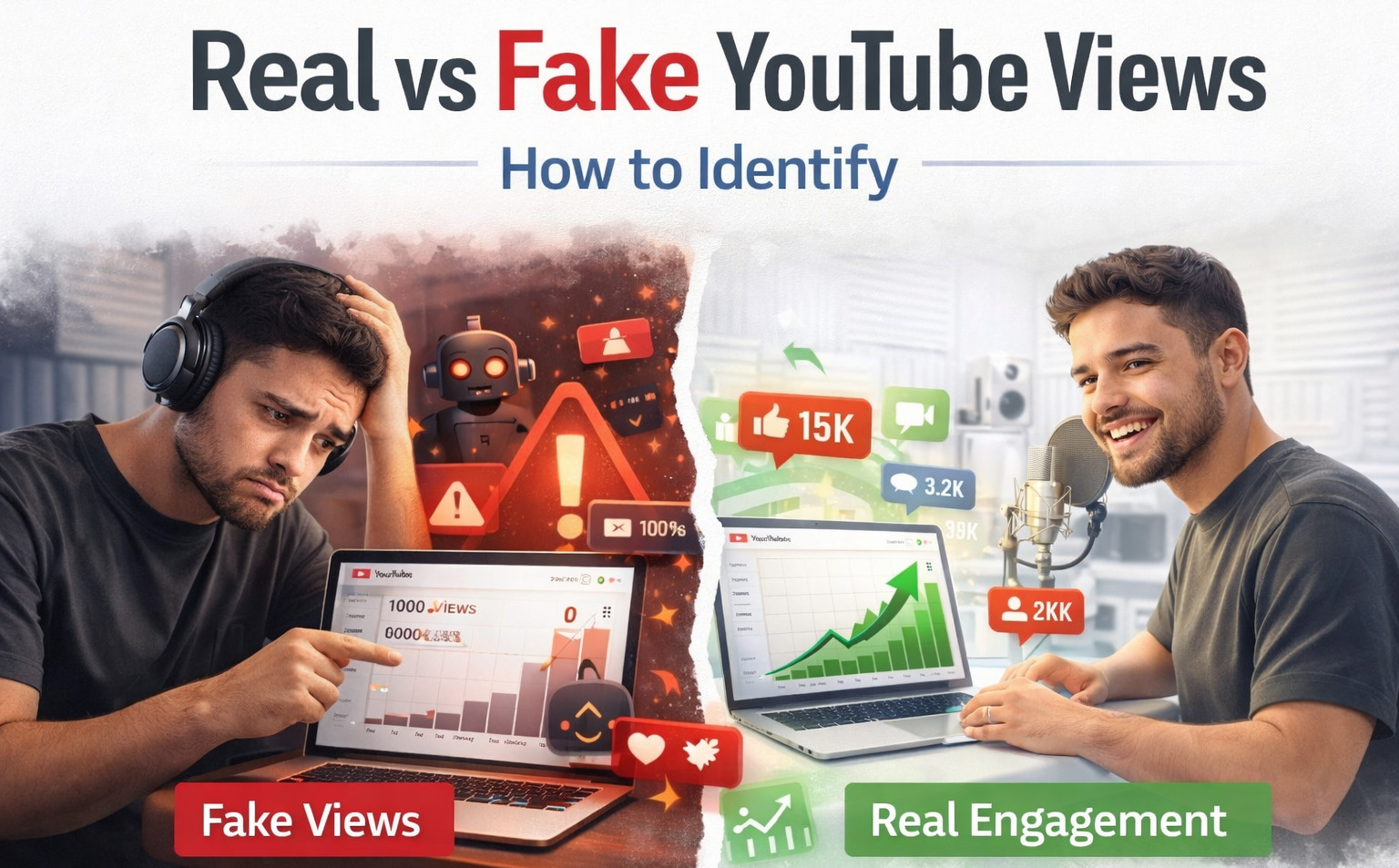
If you’ve ever tried promoting a YouTube video, you’ve probably had the same worry many creators have: Are these views actually real?
A lot of services promise thousands of views overnight. At first glance it sounds great, but many creators later discover the engagement is fake. The views appear quickly, but there are no comments, no likes, and no real audience growth.
This confusion is very common, especially for new musicians and content creators. Understanding the difference between real and fake views can help you protect your channel and invest your promotion efforts in the right places.
Fake Views Usually Appear Too Fast
One of the easiest ways to spot fake views is the speed at which they arrive.
If a brand-new video suddenly gets thousands of views within minutes without any audience base, that’s often a sign something unnatural is happening. Real viewers discover videos gradually through search, recommendations, or ads.
For example, imagine uploading a music video and seeing 10,000 views appear within an hour but almost no likes or comments. That kind of pattern usually suggests automated traffic rather than real people watching.
Real growth tends to look slower but much healthier over time.
Real Views Come With Engagement
Another major difference is engagement. Real viewers behave like real people—they react to the content.
They might leave comments, click the like button, subscribe to the channel, or even share the video with friends. These signals help YouTube understand that the content is valuable.
Fake traffic doesn’t behave this way. A video might show thousands of views but only one or two likes. When engagement doesn’t match the view count, it often indicates low-quality or artificial traffic.
Understanding what real YouTube promotion actually means helps creators avoid these misleading metrics and focus on genuine audience growth.
Audience Retention Tells a Big Story
YouTube’s analytics provide another helpful clue: audience retention.
When real viewers watch your content, they usually stay for a reasonable portion of the video. Even if they don’t finish the entire video, they often watch several minutes.
Fake views, however, tend to drop off almost instantly. In analytics, this appears as extremely low watch time or sudden drops in retention graphs.
For example, if a five-minute video shows an average watch time of only a few seconds, that often suggests the views didn’t come from real people.
Genuine Promotion Brings Targeted Viewers
Real promotion focuses on getting your video in front of people who are actually interested in the topic.
For music creators, that might mean targeting fans of similar artists or specific music genres. When the audience is relevant, viewers are more likely to watch longer and interact with the content.
For instance, promoting a hip-hop track to listeners who regularly watch hip-hop videos makes much more sense than sending the video to random viewers.
Creators who want a deeper understanding of safe strategies can also explore Safe YouTube Promotion Methods, which explain how legitimate promotion approaches work without risking a channel.
Fake Promotion Often Violates YouTube Policies
Another problem with fake views is that they can violate YouTube’s platform rules.
YouTube’s systems are designed to detect artificial traffic patterns. If suspicious activity appears on a video, the platform may remove those views or even take action against the channel.
This means fake promotion can damage your channel instead of helping it. Many creators have seen their views suddenly disappear after YouTube audits suspicious traffic.
Real promotion methods, on the other hand, follow YouTube’s guidelines and aim to connect content with actual viewers.
Real Growth Builds Long-Term Audience
The biggest difference between real and fake promotion shows up over time.
Fake views might create a temporary spike in numbers, but they rarely lead to subscribers or loyal viewers. The video appears popular for a moment but quickly loses momentum.
Real promotion builds gradually. New viewers discover the content, some subscribe, and a portion of them return to watch future uploads.
That slow but steady audience growth is what actually helps a YouTube channel succeed in the long run.
Final Thoughts
Many creators get excited when they see large view numbers, but numbers alone don’t tell the full story. What matters more is whether those views represent real people who are genuinely interested in the content.
Learning how to recognize the difference between real and fake promotion can save creators a lot of frustration. Genuine promotion focuses on engagement, audience targeting, and steady growth rather than quick artificial spikes.
When creators prioritize authentic viewers, their channels tend to grow in a healthier and more sustainable way.
FAQs
- What are fake YouTube views?
Fake views are artificially generated views that come from bots or automated systems rather than real people watching the video.
- Can YouTube detect fake views?
Yes. YouTube has systems designed to identify suspicious traffic patterns and remove invalid views from videos.
- Why do fake views harm a YouTube channel?
Fake views often lead to low engagement and poor watch time, which can negatively affect how YouTube recommends your content.
- What is the biggest sign of fake video promotion?
A large number of views with almost no likes, comments, or audience retention is often a strong sign of artificial traffic.
- Do real YouTube promotions increase subscribers?
They can. When genuine viewers discover content they enjoy, some of them naturally subscribe to the channel.
- How can creators promote videos safely?
Safe promotion focuses on reaching real audiences through legitimate methods such as targeted ads, organic discovery, and audience engagement strategies.